Digital habits
Small routines are useful when they fit the day you actually have. This topic is about reducing avoidable friction: unclear next actions, loose downloads, notifications without a purpose and saved material you cannot find again. The aim is a workable next step rather than a perfect productivity system.
Start with the weekly reset when several small queues are getting in the way. Its twenty minute example has a defined scope and a stopping point. A shorter version is available for a busy day, and larger migrations stay on a separate maintenance plan.
Use the focus planning article when you need to fit one outcome into a real window. It compares three schedules for ninety minutes and explains the difference between complete blocks, breaks and leftover time. The calculator does scheduling arithmetic; it does not claim that one interval produces the best focus for everyone.
The Downloads, notes and bookmark guides address what happens between work sessions. File a useful document while you still know its purpose, write a next action with context, and save a link for a named reason. The notification article helps you preserve necessary obligations while making routine updates more deliberate.
Start here.
A suggested reading order. Choose the task that matters to you.
- 1A weekly digital reset in twenty minutes →
Use a time limit, process the most useful loose ends, and leave larger maintenance jobs on a separate list.
- 2Plan a focus session that fits your actual day →
Start with one finish line and the time available. A useful focus session ends with progress and a clear next step, even if it is short.
- 3Write notes that are still useful next week →
Capture the reason, the important detail and the next action. A note should help your future self continue without reconstructing the whole conversation.
All digital habits articles.
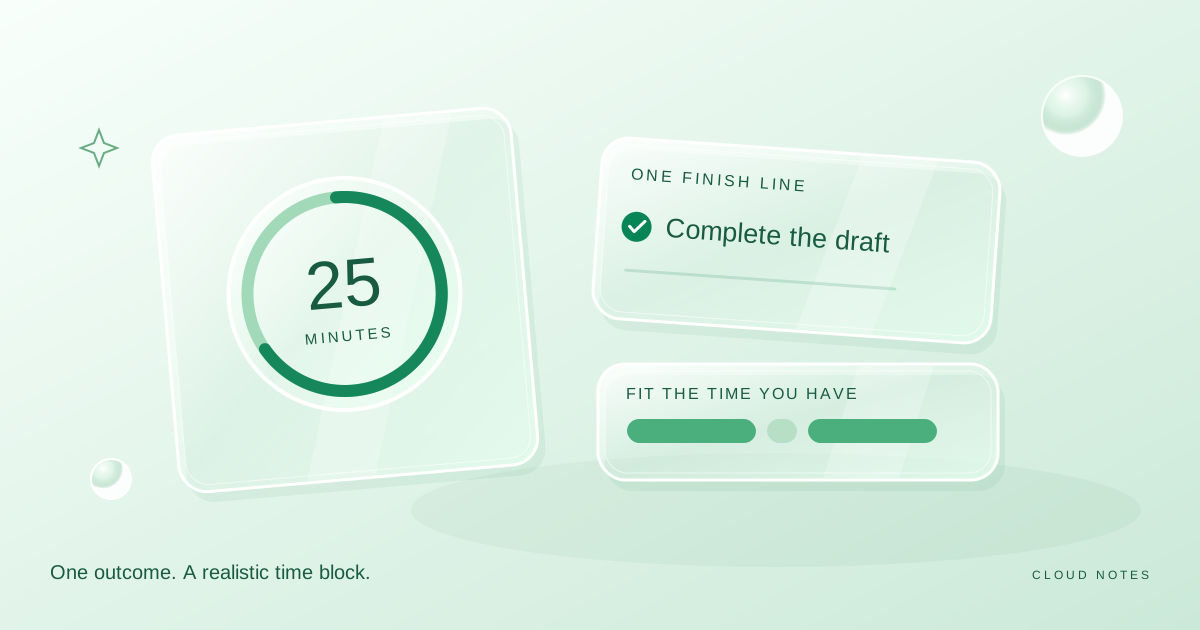
Plan a focus session that fits your actual day
Choose one concrete outcome, fit it into the time you have and make interruptions easier to handle. Includes a flexible session plan and reflection questions.
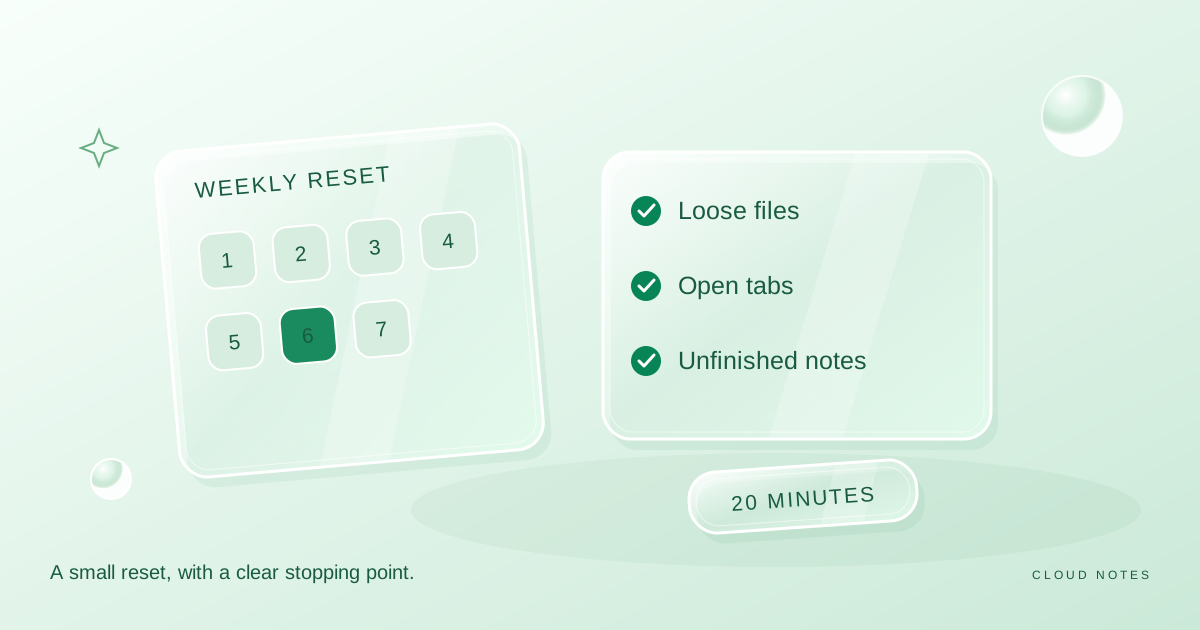
A weekly digital reset in twenty minutes
A bounded routine for loose files, open tabs, unfinished notes and backup checks. Finish with fewer loose ends instead of a major reorganisation.
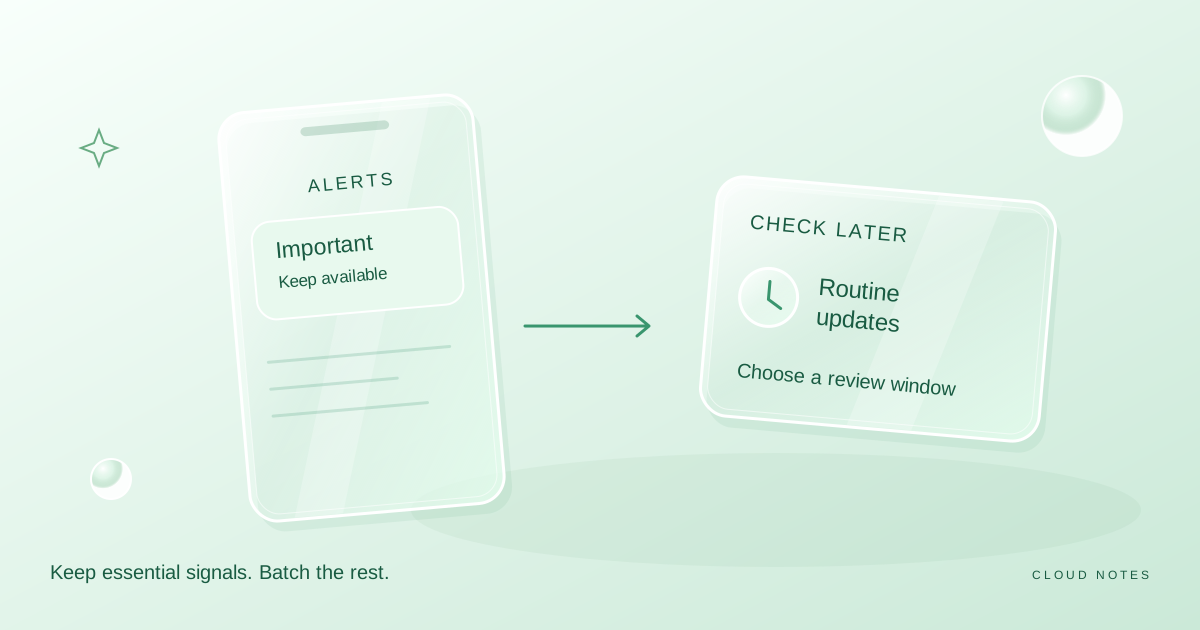
Give every notification a purpose
Audit notification channels by urgency and consequence. Keep important signals while moving routine updates into a more deliberate checking routine.
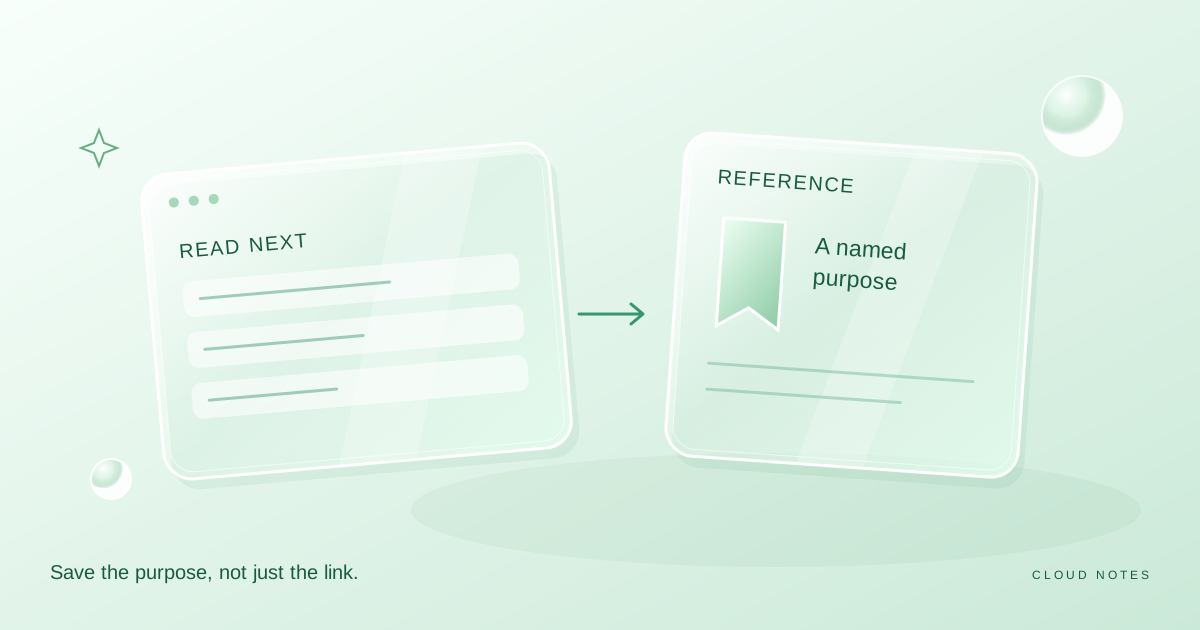
Save bookmarks you can find again
Turn a large bookmark pile into a current queue and a small reference library with useful labels, purpose notes and a bounded review routine.
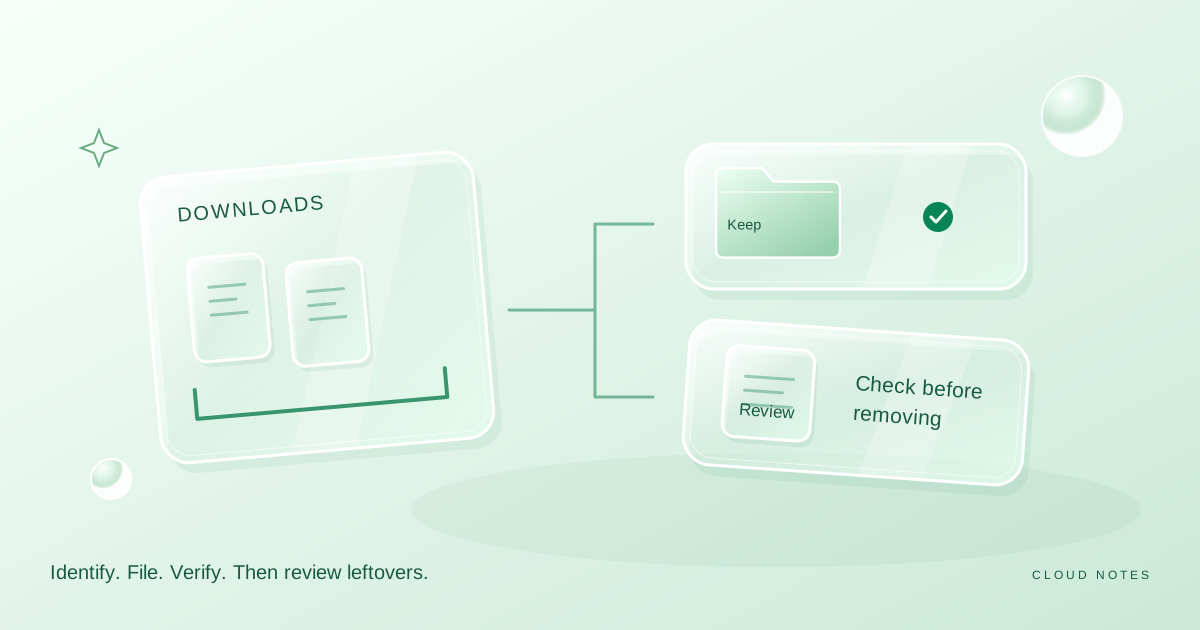
Tidy your Downloads without losing useful files
A careful Downloads cleanup routine that separates temporary items from real documents, preserves useful copies and avoids rushed bulk deletion.
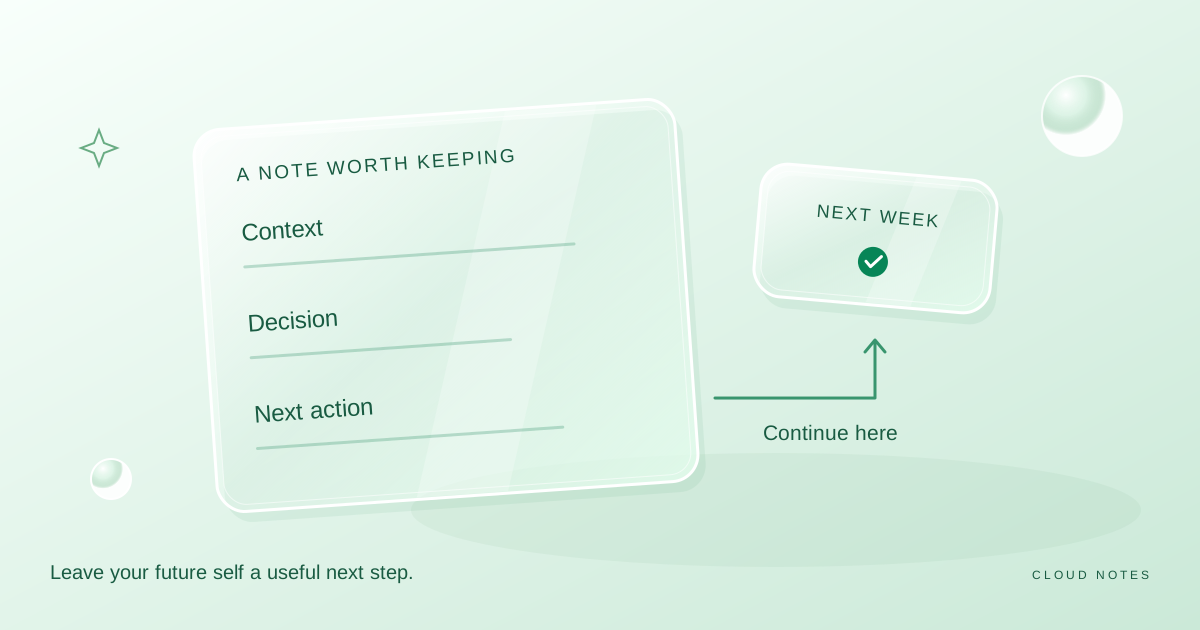
Write notes that are still useful next week
A small note template that preserves context, decisions and next actions. Learn when to capture a source, split a note or archive it.