Before you start
Fit one useful outcome into a real time window, with a restart note if interrupted.
- First step
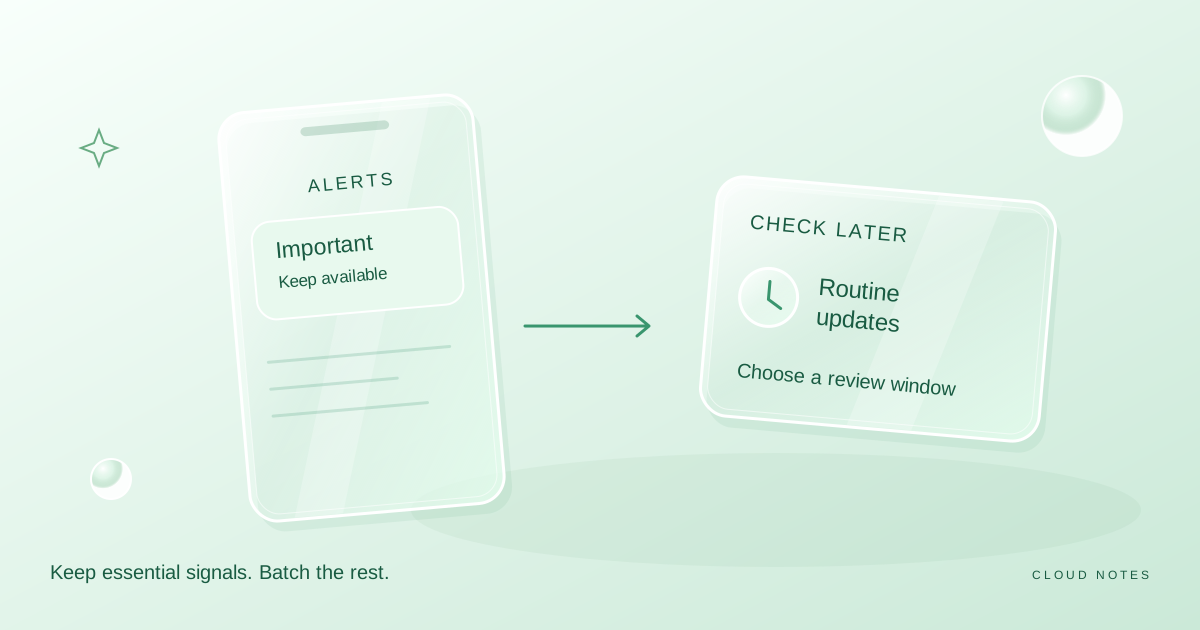
- Choose a finish line and enter the time actually available, block length and between-block break.
Done when
- The planned blocks and breaks fit the available minutes without counting a break after the final block.
- A closing or restart note makes the next action clear even if the work is unfinished.
Limit of this method: A schedule calculation is not evidence that one interval improves productivity or that a task will finish on time.
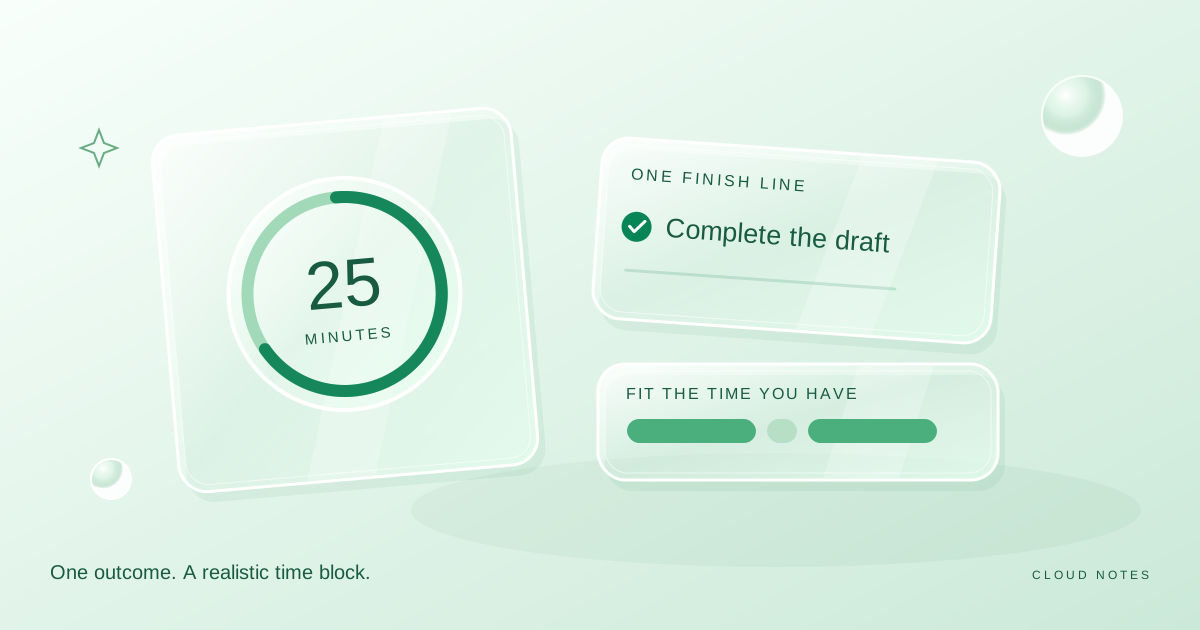

Define a finish line, protect necessary interruptions and record a useful next step.
Free text worksheet. No signup. Fill it locally; the site does not receive your entries.A focus session does not need the perfect timer length or a completely silent room. It needs a realistic task, enough time to begin, and an agreement about what can interrupt it. This is a planning exercise, not a claim that one interval produces better cognitive performance for everyone.
Use the method for a study task, personal administration or creative work. Adapt it to your responsibilities, comfort and available time.
Define a finish line
Replace work on the document with draft the first three paragraphs. Replace study with answer five practice questions and mark the uncertain ones. A finish line makes it easier to decide whether the session needs twenty minutes or a longer block.
Do not choose a finish line that depends entirely on someone else. Waiting for a reply is not an action you can complete during a focus block. You can prepare the questions, send the message during the appropriate time, and plan a different independent task.
Write down the smallest useful result. If the day becomes busy, that result becomes a sensible stopping point rather than evidence that the whole plan failed.
Separate setup from the task
Gather the relevant files, open the needed page and write the first action before beginning. If you spend the entire interval locating material, the task estimate was incomplete. Record that overhead and include it next time.
Close unrelated tabs or move them into a later list. You do not need to erase every distraction permanently. You need to make the current task visible and easy to return to.
Keep a short capture note nearby. When you remember a different errand, add a few words to the note and return to the task. Do not turn the capture note into a second planning project.
Choose a block you can afford
Start with the time available today. If you have forty minutes, a plan for three long intervals will not fit. The focus planner on this site divides available minutes into whole blocks with breaks between them, and reports the time left over.
For example, ninety minutes with twenty five minute blocks and five minute breaks fits three blocks, using eighty five minutes. The remaining five minutes can hold a closing note. These numbers illustrate scheduling arithmetic, not an optimal productivity prescription.
If a long block is uncomfortable, shorten it. If an interruption is likely, select work that can stop safely. Avoid starting a task whose next step leaves a device, process or responsibility unattended.
Agree on interruption rules
Decide which messages genuinely need a prompt response. A caregiver, an on call worker and someone studying alone have different constraints. Keep necessary channels available instead of disabling everything indiscriminately.
For ordinary notifications, choose a later check time. Tell relevant people when you will be available if that fits the relationship and work rules. A useful plan acknowledges obligations rather than pretending they disappear.
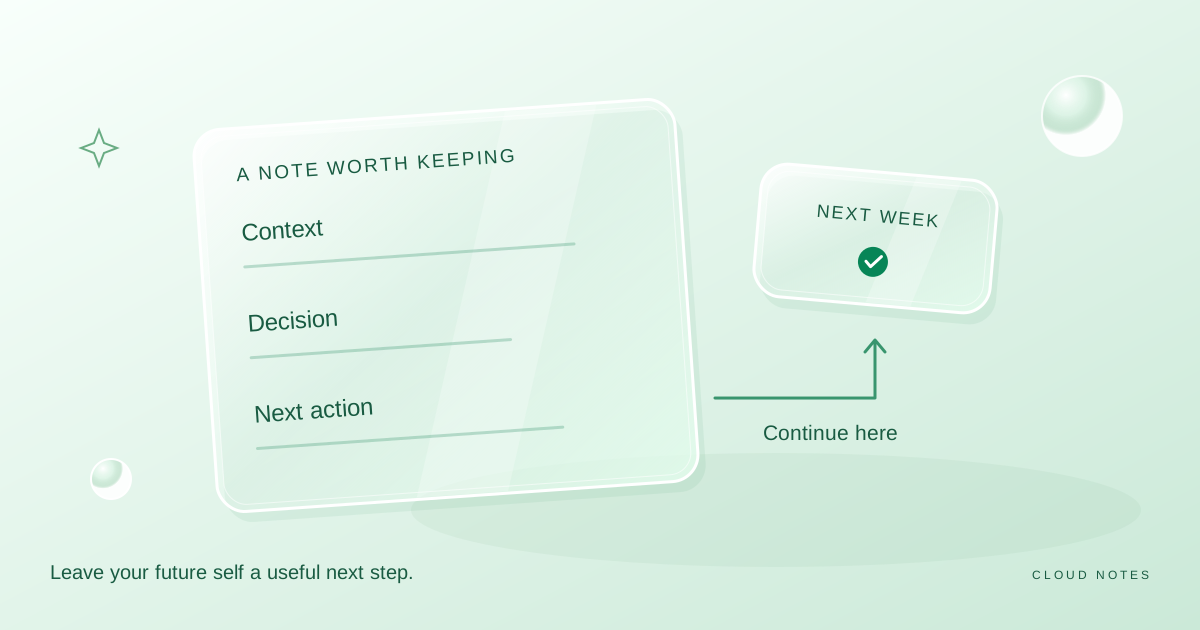
When an interruption happens, write the exact next step before switching. Resume from that note instead of trying to reconstruct the last ten minutes from memory.
Finish with a short handoff to yourself
Record what changed, what remains uncertain and what you will do next. For a writing task, the note might say the opening is drafted, the second example needs a source, and the next step is to verify that example.
Leave the files in a known location and give a new version a recognisable name. Closing a session cleanly reduces setup work for the next session.
If you completed less than expected, identify the cause. Was the task too large, the setup incomplete or the interruption unavoidable? Adjust one factor. Do not respond by creating a more elaborate schedule than you have time to follow.
Review the pattern, not one difficult day
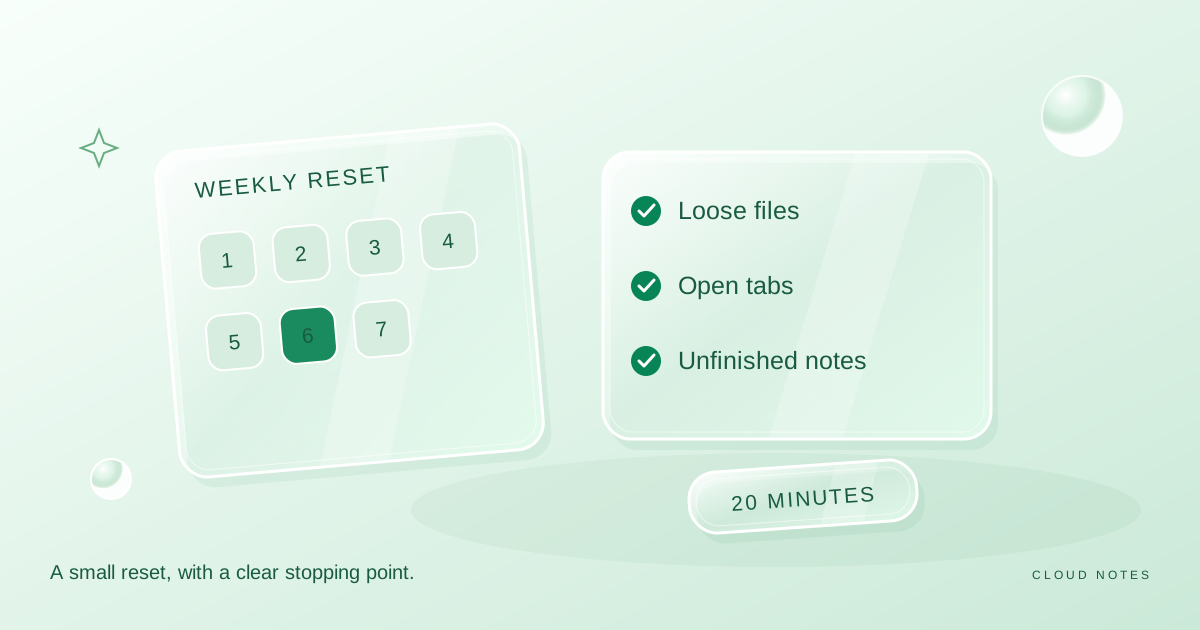
Try a small number of sessions and compare the planned finish line with the result. Look for recurring friction: missing material, ambiguous tasks or a block that never fits your day.
Use the evidence to choose a better default. A shorter repeatable session may be more useful than a long ideal session you rarely start. Keep the method flexible enough that a busy day still allows meaningful progress.
Compare three schedules for the same ninety minutes
A schedule calculator tells you what fits; it does not establish the ideal way to work. These examples use complete blocks and put breaks only between them.
| Block and break | Complete blocks | Focus time | Break time | Time left |
|---|---|---|---|---|
| 25 minute block, 5 minute break | 3 | 75 minutes | 10 minutes | 5 minutes |
| 40 minute block, 10 minute break | 2 | 80 minutes | 10 minutes | 0 minutes |
| 20 minute block, no scheduled break | 4 | 80 minutes | 0 minutes | 10 minutes |
The first option leaves five minutes for setup or a closing note. The second fills the whole window, so you need to include setup elsewhere or shorten the task. The third is arithmetic only; the absence of a scheduled break is not advice to ignore comfort, responsibilities or a need to stop.
Choose the schedule that fits the task and your day. For a document draft, you might use the first block to outline, the second to draft and the third to revise a specific section. If a stage needs more time, write the next action rather than pretending the original finish line was reached.
Use a restart note after an interruption
A helpful restart note names the file, the exact unfinished step and any uncertainty. For example: Open the draft in Active / Course essay, continue paragraph three, then check the source for the second example. That note is more useful than resume writing.
Download the session plan and try the planner. Keep the actual result beside the planned result so your next estimate has some evidence behind it.
Common questions
Is twenty five minutes mandatory?
No. It is a common example, not a rule. Use a length that fits your task and responsibilities.
What if I finish early?
Review the result, record the next step and decide whether another small task fits. You do not need to fill the clock for its own sake.
Can a planner guarantee better focus?
No. It makes the schedule and scope explicit. Your result depends on the work, circumstances and what you learn from using it.
Examples are illustrative planning exercises unless a source says otherwise. Read our editorial policy for sources, AI assistance and corrections. See example data and checking methods for reproducible calculations and practice files.